

Patient Intake Management Software: Transforming Healthcare Onboarding and Patient Experience
In today’s rapidly evolving healthcare landscape, efficiency, accuracy, and patient satisfaction are more important than ever. One of the most critical yet often overlooked stages of the patient journey is intake—the process of collecting, verifying, and organizing patient information before clinical care begins. Traditionally, this process has been paper-heavy, time-consuming, and prone to errors. However, the rise of patient intake management software has fundamentally changed how healthcare providers handle this essential workflow.
This article explores how modern digital intake solutions are reshaping healthcare operations, improving patient experience, reducing administrative burden, and contributing to better clinical outcomes.
Understanding Patient Intake in Modern Healthcare
Patient intake refers to the initial process where healthcare providers gather essential information about a patient before an appointment or treatment. This typically includes:
Personal identification details
Insurance information
Medical history
Current symptoms or complaints
Consent forms and legal documentation
Emergency contact information
In a traditional setting, this information is collected manually using paper forms or filled out in-office upon arrival. This method often leads to long wait times, incomplete records, and administrative bottlenecks.
Modern healthcare organizations are increasingly turning to digital solutions to streamline this process and ensure data accuracy from the very beginning of the patient journey.
What Is Patient Intake Management Software?
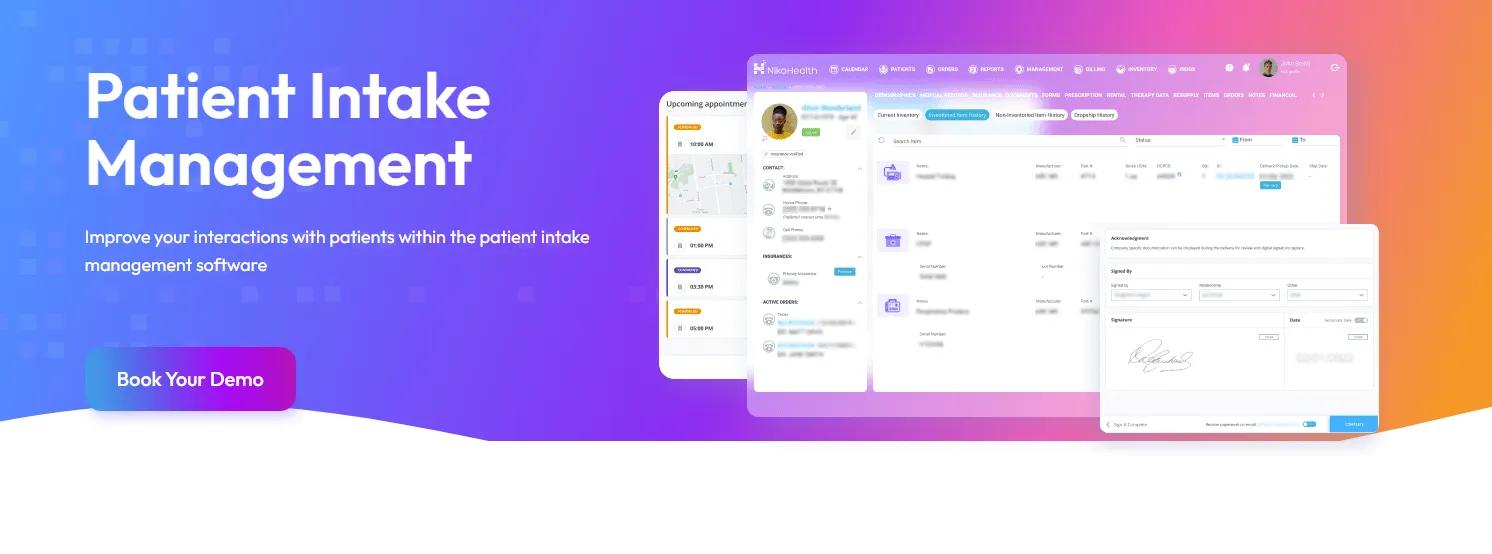
Patient intake management software is a digital solution designed to automate and optimize the process of collecting, managing, and storing patient information before clinical visits.
It typically includes tools for:
Online patient registration forms
Digital consent capture
Insurance verification automation
Pre-visit questionnaires
Electronic health record (EHR) integration
Automated reminders and notifications
Secure data storage and compliance management
By replacing manual paperwork with structured digital workflows, healthcare providers can significantly reduce administrative workload and improve operational efficiency.
Why Patient Intake Matters More Than Ever
The intake process is the first real interaction between a patient and a healthcare organization. A poorly managed intake experience can negatively affect patient satisfaction and even clinical outcomes.
Key challenges in traditional intake systems include:
1. Long Waiting Times
Patients often arrive early to complete paperwork, leading to crowded waiting rooms and frustration.
2. Data Entry Errors
Manual entry increases the risk of incorrect or incomplete information being recorded.
3. Staff Overload
Administrative teams spend significant time re-entering data into electronic systems.
4. Delayed Care Delivery
Incomplete intake information can delay diagnosis and treatment.
5. Compliance Risks
Paper-based systems are harder to secure and manage in accordance with healthcare regulations.
These challenges highlight the need for a more efficient and reliable approach.
How Patient Intake Management Software Works
Modern intake platforms are designed to digitize and automate the entire pre-visit workflow. Here is how the process typically works:
Step 1: Pre-Visit Digital Forms
Patients receive a secure link via email or SMS to complete intake forms before their appointment.
Step 2: Identity and Insurance Verification
The system automatically verifies insurance details and patient identity using integrated databases.
Step 3: Medical History Collection
Patients input their medical history, allergies, medications, and symptoms.
Step 4: Consent and Documentation
Digital signatures are used for consent forms, privacy policies, and legal documents.
Step 5: Data Integration
All collected data is automatically synced with the provider’s EHR system.
Step 6: Staff Review
Healthcare staff can review and validate information before the patient arrives.
This streamlined process reduces manual intervention and ensures that clinicians have complete and accurate patient data before the appointment begins.
Key Benefits of Patient Intake Management Software
Implementing a digital intake system provides significant advantages for both healthcare providers and patients.
1. Improved Patient Experience
Patients no longer need to arrive early to fill out paperwork. They can complete the intake process at home, at their convenience. This reduces stress and improves overall satisfaction.
2. Reduced Administrative Burden
Automating data collection eliminates repetitive manual tasks, allowing staff to focus on higher-value activities such as patient support and coordination.
3. Faster Patient Flow
With pre-filled and verified information, patient check-in becomes faster, reducing waiting room congestion and improving clinic efficiency.
4. Higher Data Accuracy
Digital forms reduce the risk of illegible handwriting and missing fields, leading to more accurate patient records.
5. Better Clinical Decision-Making
When providers have access to complete and structured patient data before the visit, they can make more informed decisions.
6. Enhanced Compliance and Security
Modern systems are designed to comply with healthcare regulations such as HIPAA, ensuring patient data is securely stored and transmitted.
7. Cost Efficiency
By reducing paperwork, administrative labor, and operational inefficiencies, healthcare organizations can significantly reduce costs.
Features to Look for in Patient Intake Management Software
Not all solutions are created equal. Healthcare providers should evaluate software based on the following essential features:
1. Customizable Intake Forms
The ability to tailor forms to different specialties such as dermatology, cardiology, or general practice.
2. Mobile-Friendly Interface
Patients should be able to complete intake forms easily on smartphones and tablets.
3. EHR Integration
Seamless integration with existing electronic health record systems is critical.
4. Automated Insurance Verification
Real-time verification reduces billing errors and claim rejections.
5. Secure Data Encryption
End-to-end encryption ensures sensitive patient data is protected.
6. Digital Signature Support
Patients should be able to sign consent forms electronically.
7. Workflow Automation
Automated reminders, notifications, and follow-ups improve efficiency.
8. Multi-Language Support
Useful for clinics serving diverse patient populations.
Impact on Healthcare Providers
Healthcare organizations adopting digital intake systems experience measurable improvements across multiple areas.
Operational Efficiency
Clinics report faster check-in times and smoother patient flow.
Staff Productivity
Front-desk teams spend less time on paperwork and more time assisting patients.
Revenue Cycle Improvement
Accurate insurance data at intake reduces claim denials and payment delays.
Reduced No-Show Rates
Automated reminders and pre-visit engagement help patients stay committed to appointments.
Improved Patient Retention
A seamless onboarding experience increases trust and loyalty.
Impact on Patients
Patients also benefit significantly from modern intake systems.
Convenience
Patients can complete forms anytime, anywhere.
Transparency
Clear instructions and structured forms reduce confusion.
Shorter Waiting Times
Less time spent in waiting rooms improves satisfaction.
Better Communication
Patients are more engaged in their care journey from the beginning.
Challenges in Implementation
Despite its benefits, implementing patient intake management software can come with challenges:
1. Integration Complexity
Connecting with legacy EHR systems may require technical effort.
2. Staff Training
Employees need training to adapt to new digital workflows.
3. Patient Adaptation
Some patients, especially older populations, may prefer paper-based forms.
4. Data Migration
Transferring existing records into digital systems must be handled carefully.
5. Initial Investment
Upfront costs can be a barrier for smaller clinics.
However, most of these challenges are short-term and are outweighed by long-term efficiency gains.
Future Trends in Patient Intake Technology
The future of patient intake is becoming increasingly intelligent and automated. Several trends are shaping the next generation of solutions:
1. Artificial Intelligence Integration
AI will help pre-fill forms, detect missing data, and predict patient needs.
2. Voice-Based Intake
Patients may soon complete intake forms using voice assistants.
3. Predictive Analytics
Systems will analyze intake data to identify risk factors before consultations.
4. Telehealth Integration
Intake workflows will be seamlessly connected with virtual care platforms.
5. Biometric Authentication
Fingerprint and facial recognition may replace manual identity verification.
6. Fully Paperless Healthcare
End-to-end digital workflows will eliminate the need for physical documentation entirely.
Best Practices for Successful Implementation
To maximize the benefits of patient intake systems, healthcare providers should follow these best practices:
Start with a pilot program before full deployment
Choose software that integrates with existing systems
Provide clear training for administrative staff
Educate patients on how to use digital intake forms
Continuously monitor performance metrics
Collect patient feedback for improvements
A well-planned implementation ensures smoother adoption and faster return on investment.
Conclusion
The healthcare industry is undergoing a significant digital transformation, and patient intake is at the forefront of this change. By replacing outdated manual processes with patient intake management software, healthcare providers can streamline operations, improve patient experience, and enhance clinical efficiency.
From reducing wait times to improving data accuracy and ensuring regulatory compliance, the benefits are substantial. As technology continues to evolve, intake systems will become even more intelligent, automated, and patient-centered.
Ultimately, modern intake solutions are not just administrative tools—they are a foundational component of a more efficient, connected, and patient-friendly healthcare system.