

Healthcare reimbursement has become increasingly demanding for businesses that supply durable medical equipment. DME and HME providers must coordinate patient information, prescriptions, insurance coverage, equipment records, and payer documentation while keeping their billing operations efficient. When these processes are disconnected or rely heavily on manual work, even routine claims can become difficult to manage.
Reducing claim denials requires more than correcting errors after submission. Suppliers need a structured approach that addresses potential problems throughout the entire revenue cycle, from the initial patient inquiry to final reimbursement.
Understanding the Main Causes of Billing Problems
Medical equipment suppliers face several recurring challenges that can affect reimbursement. Understanding these issues is the first step toward developing more reliable billing procedures.
Incomplete documentation is a frequent source of complications. Certain equipment categories require specific prescriptions, medical necessity records, or additional supporting information. If the required documents are missing or inconsistent, claims may be delayed or rejected.
Incorrect coding can also create reimbursement problems. HCPCS codes, modifiers, quantities, and billing periods must accurately reflect the equipment supplied and the applicable payer requirements. Errors can occur when employees rely on outdated references or enter information manually across multiple systems.
Eligibility and authorization issues represent another important risk. A patient's insurance coverage may change, or a particular item may require prior authorization before delivery. Failing to identify these conditions early can create additional work and uncertainty about payment.
Finally, delayed claim follow-up allows unresolved issues to accumulate. Without a clear process for monitoring outstanding claims, billing teams may overlook requests for additional information or miss opportunities to resolve preventable denials.
Building a More Reliable Billing Process
A consistent billing workflow helps suppliers identify potential problems before they affect cash flow. Rather than treating billing as a separate administrative task, businesses should integrate it into their daily operational processes.
Verify Patient Coverage Before Fulfillment
Insurance verification should happen early in the order process. Staff need to confirm relevant coverage details, identify applicable documentation requirements, and determine whether authorization is necessary.
Although eligibility verification does not guarantee reimbursement, it gives suppliers an opportunity to address potential obstacles before completing an order.
Standardize Documentation Requirements
Different products and payers may require different supporting documents. Establishing standardized checklists helps employees understand what must be collected for each order type.
Digital documentation workflows can make missing information easier to identify and reduce the need to search through emails, paper files, or separate applications.
Review Claims Before Submission
Pre-submission checks can help identify inconsistencies involving patient demographics, insurance details, procedure or equipment codes, quantities, and required documentation.
Automated validation rules can flag common errors for review, allowing billing specialists to focus their attention on claims that require intervention.
Monitor Denials and Outstanding Balances
A denial should trigger a defined follow-up process. Teams should document the reason, assign responsibility, determine whether a correction or appeal is appropriate, and track the case until it reaches a resolution.
Reviewing denial trends over time can reveal recurring problems related to particular payers, equipment categories, or internal procedures.
How Technology Supports Medical Billing Teams
As a DME business expands, managing claims through spreadsheets and disconnected software becomes increasingly difficult. A centralized system can help organize patient records, insurance information, billing activity, and supporting documentation in one environment.
Modern medical billing software can support claim preparation, submission tracking, accounts receivable monitoring, and reporting. Depending on the platform, automation may also help identify incomplete records, reduce repetitive data entry, and provide reminders for unresolved billing tasks.
However, technology should be evaluated according to actual operational requirements. Suppliers should examine how well a system supports their equipment categories, payer mix, recurring billing processes, and existing business applications.
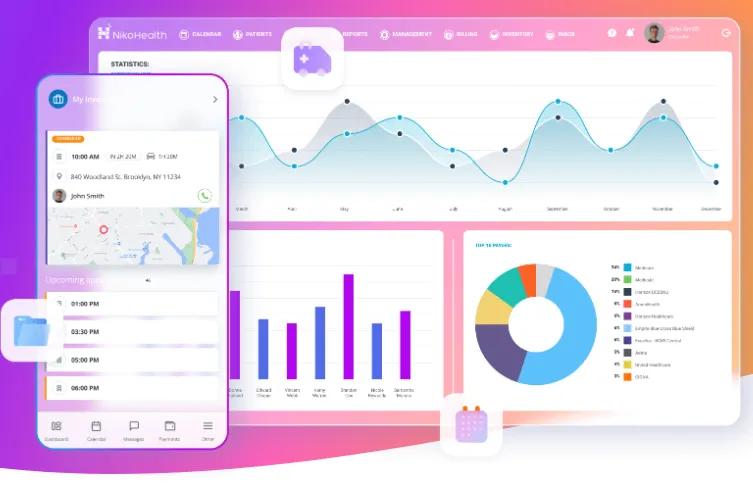
For organizations looking to modernize their workflows, reviewing the capabilities of specialized platforms such as those described in NikoHealth's DME billing software overview can provide a useful starting point for comparing available approaches.
Measuring the Effectiveness of Billing Improvements
Implementing new processes is only part of the solution. Suppliers must also determine whether those changes improve operational performance.
Several indicators can help businesses evaluate their progress:
Denial rate: The proportion of claims denied during a defined reporting period, using a consistent calculation method.
Days in accounts receivable: An indicator of how long payments remain outstanding.
First-pass acceptance rate: The percentage of claims accepted on their initial submission.
Average claim resolution time: The time required to resolve billing issues and outstanding claims.
Staff productivity: The amount of billing work completed relative to the time and resources invested.
These metrics should be reviewed together. For example, a faster submission process may not improve financial performance if denial rates increase at the same time. Combining operational and financial indicators gives managers a more balanced understanding of results.
Preparing Billing Operations for Business Growth
Growth increases the complexity of medical equipment billing. A larger patient base may bring additional payers, more recurring orders, greater documentation demands, and higher claim volumes.
Suppliers can prepare by documenting internal procedures, training employees regularly, and reducing unnecessary manual handoffs. Integrating billing with order management and inventory operations can also improve consistency between what was ordered, what was delivered, and what was billed.
Security and compliance deserve equal attention. Organizations should assess access controls, audit trails, data protection practices, and the safeguards used to protect sensitive patient information when selecting a technology provider.
A scalable billing process should accommodate higher workloads without requiring administrative effort to grow at the same rate.
Conclusion
Reducing claim denials in the medical equipment industry requires a combination of accurate documentation, consistent verification procedures, timely follow-up, and useful performance reporting. Addressing problems before claims are submitted is generally more efficient than repeatedly correcting avoidable errors afterward.
By reviewing their workflows and adopting technology suited to HME and DME operations, suppliers can improve billing consistency, gain better visibility into outstanding claims, and create a stronger foundation for sustainable growth. The most effective strategy combines automation with knowledgeable staff and clearly defined processes that support accurate reimbursement at every stage.