

How to Choose the Right DME Software for a Growing Medical Equipment Business
Running a durable medical equipment (DME) business requires more than supplying patients with essential medical products. Providers must coordinate orders, verify insurance information, maintain accurate inventory records, manage billing, and keep documentation organized. As a company grows, handling these responsibilities across disconnected systems can become increasingly difficult.
Choosing the right software can help medical equipment suppliers improve operational efficiency, reduce repetitive administrative work, and create a more consistent experience for patients and staff.
Why DME Providers Need Specialized Software
General business management platforms rarely address every requirement of the DME industry. Medical equipment suppliers work with payer-specific billing rules, detailed documentation requirements, recurring rental claims, delivery records, and ongoing patient supply needs.
Without specialized software, employees may spend considerable time switching between applications, checking spreadsheets, and manually updating records. These fragmented workflows can lead to delayed claims, inventory discrepancies, missed follow-ups, and avoidable administrative expenses.
A dedicated DME management system brings essential processes together. Depending on the platform, this may include order intake, insurance verification, billing, accounts receivable, inventory management, delivery coordination, and reporting.
The main objective is to establish a reliable flow of information from the initial referral through fulfillment and reimbursement.
Five Features to Evaluate When Comparing DME Platforms
Not every software solution offers the same capabilities. Before committing to a platform, providers should evaluate how its features support their actual business processes.
1. Integrated Billing and Claims Management
Billing is one of the most important areas of DME operations. Incomplete documentation, incorrect coding, and missing information can delay reimbursement and increase the administrative burden on billing teams.
Look for software that supports claims preparation, payer-specific requirements, payment posting, denial tracking, and accounts receivable monitoring. Automated checks can help staff identify potential problems before claims are submitted.
Providers should also investigate how the system handles recurring rentals and other billing scenarios relevant to their product categories.
2. Inventory Visibility Across Locations
Inventory management becomes more complicated as suppliers add warehouses, branches, product categories, and delivery teams.
An effective system should provide visibility into stock levels, product movements, order allocation, and replenishment needs. Depending on the business model, serial-number tracking and equipment asset management may also be essential.
Accurate inventory information helps employees avoid promising unavailable products, purchasing unnecessary stock, or losing track of equipment moving between locations.
3. Delivery Coordination and Proof of Delivery
Deliveries directly affect patient satisfaction and operational costs. Poor scheduling, incomplete delivery records, and communication gaps can create additional work for office staff.
DME providers should assess whether a platform offers delivery scheduling, mobile access for drivers, route coordination, delivery status updates, and electronic proof of delivery.
Connecting delivery information with order and billing records can also help employees confirm that the necessary documentation is available before proceeding with reimbursement workflows.
4. Automation for Repetitive Administrative Tasks
Manual processes consume valuable time, particularly when employees repeatedly contact patients, request missing documents, update records, or follow up on recurring supply orders.
Automation can help standardize these activities. Depending on the platform, useful capabilities may include automated notifications, recurring order workflows, document processing, and reminders for outstanding tasks.
The goal is not to eliminate human oversight. Instead, automation should reduce repetitive work while allowing employees to focus on exceptions, patient communication, and decisions that require professional judgment.
5. Reporting and Operational Visibility
Managers need reliable information to understand how the business performs. Useful reporting capabilities may cover claim acceptance, denial trends, days in accounts receivable, inventory turnover, delivery performance, and order fulfillment.
When information is distributed across separate systems, creating accurate reports can require extensive manual work.
A centralized platform can make it easier to identify bottlenecks, compare performance between locations, and determine which operational changes deserve attention.
Comparing Established Systems With Modern Cloud-Based Platforms
DME software buyers often compare established industry systems with newer cloud-based alternatives. Both categories may offer valuable functionality, but their suitability depends on the provider's requirements.
Established platforms may offer extensive industry experience, specialized workflows, and integrations developed over many years. However, businesses should verify whether the interface, implementation process, and available automation match their current needs.
Cloud-based platforms may offer browser access, centralized updates, and easier access for teams working across multiple locations. Nevertheless, the term “cloud-based” alone does not guarantee superior functionality or a simpler implementation.
Providers should compare products using the same practical scenarios rather than relying exclusively on demonstrations or feature lists.
For example, ask each vendor to demonstrate how a new referral becomes an order, how missing documentation is identified, how a claim is prepared, and how delivery confirmation becomes available to the billing team.
When Should a DME Business Consider an Alternative?
Changing software is a significant decision, especially when the existing system contains years of patient records, billing history, and operational information.
However, several recurring problems may indicate that it is time to reassess the current platform.
Growing administrative workload: If the company must continually add employees just to maintain existing processes, automation and workflow integration deserve closer examination.
Limited operational visibility: Managers may struggle to obtain reliable information when inventory, billing, and delivery records are maintained separately.
Difficult reporting: Repeated spreadsheet exports and manual reconciliation can slow decision-making and increase the risk of inconsistent figures.
Changing business requirements: Expansion into new product categories, additional locations, or more complex payer relationships may require capabilities that the current system does not adequately support.
Unsatisfactory implementation or support: Slow issue resolution, limited training, or unclear upgrade processes can affect employee productivity and business continuity.
Before switching, providers should identify the underlying problem and determine whether it can be resolved through configuration, training, integration, or a different platform.
Evaluating a Bonafide DME Alternative
Providers currently using Bonafide or considering it for their operations should compare available options against their specific requirements. A useful starting point is to review a bonafide dme alternative and examine the differences in functionality, implementation, pricing, and integration capabilities.
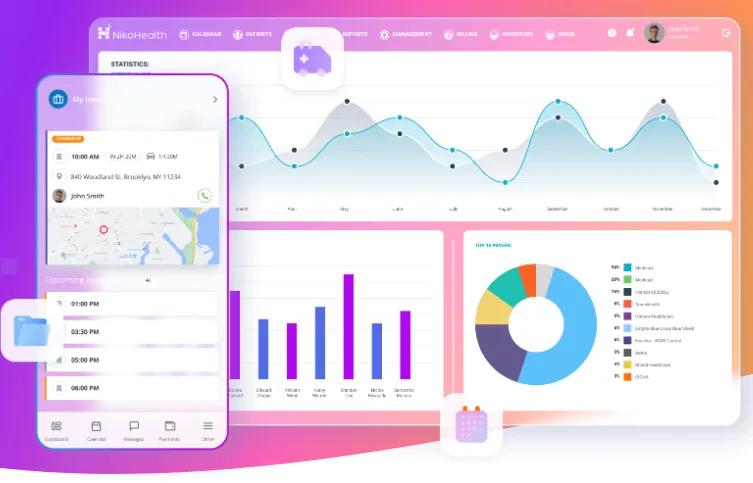
NikoHealth is one platform worth evaluating for suppliers seeking an integrated approach to DME business management. Its software brings together areas such as billing, inventory, order processing, and delivery management within a cloud-based environment.
However, no single platform is ideal for every supplier. Organizations with complex warehouse operations, specialized product requirements, extensive reporting needs, or established third-party integrations should validate these workflows before making a decision.
A structured comparison should include the following questions:
Does the platform support the company's product categories and payer requirements?
Can it manage billing, inventory, and delivery without excessive manual data entry?
Which existing systems and external services can it integrate with?
How much historical data can be migrated, and how will its accuracy be verified?
What training and implementation support are included?
Can the vendor provide references from businesses with a similar operational scale?
These questions help buyers evaluate practical suitability rather than selecting software based on marketing claims alone.
Conclusion
Choosing DME software requires a clear understanding of operational priorities, financial goals, and future growth plans. Integrated billing, accurate inventory management, coordinated deliveries, automation, and useful reporting can all contribute to a more efficient business.
The most effective approach is to evaluate several platforms using consistent criteria, test important workflows, and establish a realistic migration plan. By focusing on practical requirements rather than feature counts alone, DME providers can make a better-informed decision and build a stronger foundation for sustainable growth.