

How Automation Is Improving Medical Resupply Management for DME Providers
Introduction
Medical resupply management is an essential part of running a durable medical equipment (DME) business. Many patients depend on recurring shipments of supplies to manage chronic conditions, maintain respiratory health, or continue treatment at home. For providers, ensuring that these products reach customers on time requires coordination between inventory teams, billing specialists, customer service representatives, and delivery personnel.
Despite its importance, resupply management often involves repetitive administrative tasks. Staff members must identify eligible patients, confirm ongoing needs, contact customers, verify documentation, and coordinate orders. When these activities rely heavily on manual processes, even a small operational issue can lead to delayed shipments, missed orders, or lost revenue.
Automation offers a practical way to address these challenges. By connecting patient communication, order processing, and inventory workflows, DME providers can reduce administrative burdens while creating a more consistent resupply experience.
Why Medical Resupply Processes Become Difficult to Manage
Recurring supply orders may appear straightforward, but managing them across a large patient population can quickly become complicated. Each patient may have different product requirements, replenishment schedules, insurance conditions, and documentation needs.
Several common challenges affect resupply operations.
Manual Patient Outreach
Many DME companies still depend on employees to make phone calls, send reminders, and follow up with patients who do not respond. As patient volumes increase, maintaining consistent communication becomes more difficult.
Missed calls and outdated contact information can delay order confirmation. Meanwhile, staff members may spend hours contacting patients who are not yet ready to reorder or do not currently need additional supplies.
Incomplete Documentation
Resupply orders may require updated prescriptions, medical records, proof of continued need, or other supporting documentation. If information is missing, employees must contact the appropriate parties and track outstanding requirements.
Without a centralized process, documents can become difficult to locate, and orders may remain unresolved longer than necessary.
Inventory and Order Coordination
Resupply teams must also ensure that requested products are available when orders are processed. Inventory discrepancies, unexpected demand, and inaccurate product records can create delays that affect both patient satisfaction and operational efficiency.
These challenges demonstrate why resupply management requires more than occasional reminders. Providers need coordinated workflows that connect communication, documentation, inventory, and order fulfillment.
The Role of Automation in Modern DME Resupply
Automation helps providers replace repetitive manual activities with structured workflows. Instead of requiring employees to manage every step individually, software can identify upcoming resupply opportunities, initiate outreach, collect responses, and direct orders through the appropriate processing stages.
Effective dme resupply automation can help organizations manage recurring patient needs more consistently while allowing employees to focus on exceptions and situations requiring personal attention.
For example, a system may identify patients approaching their expected reorder dates and initiate an approved communication sequence. Patients can confirm their needs, request assistance, or indicate that they no longer require a particular product. The system can then route each response to the appropriate next step.
Automation does not eliminate the need for human oversight. Rather, it gives employees better tools for managing routine work and identifying orders that need additional review.
Five Ways Automation Improves Resupply Operations
1. More Consistent Patient Communication
Automated communication helps providers reach patients at appropriate intervals without requiring staff members to initiate every interaction manually.
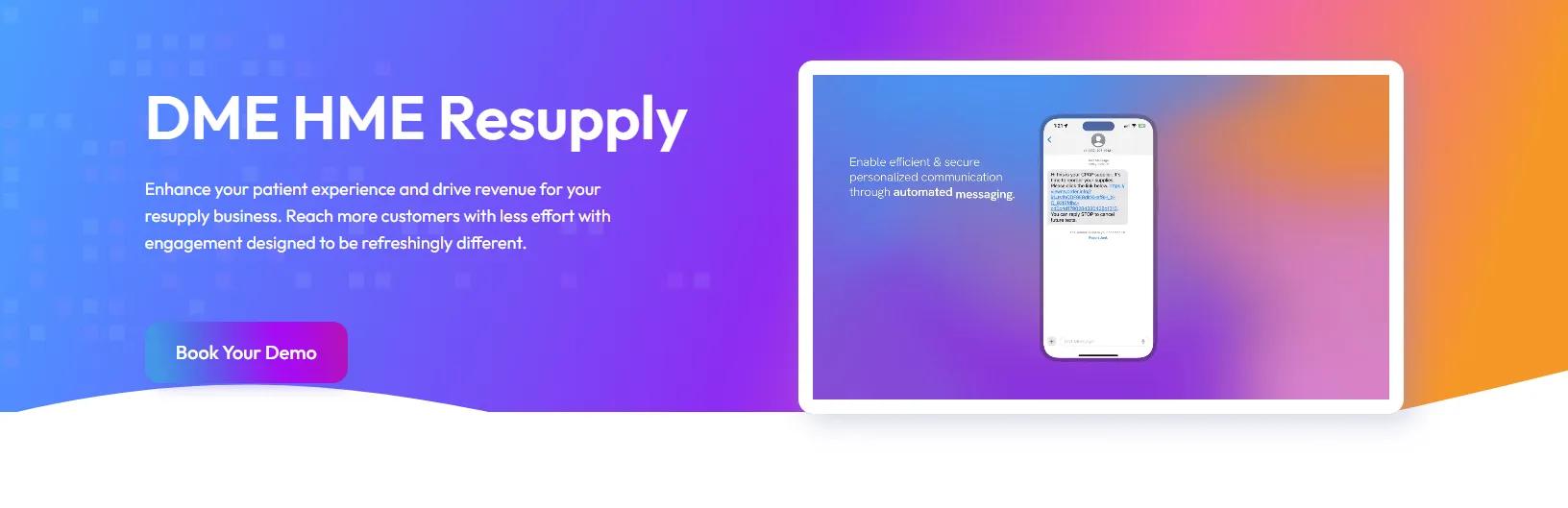
Depending on the platform, outreach may include text messages, emails, or automated voice calls. Patients can receive reminders and respond through convenient communication channels, reducing the need for repeated manual follow-ups.
Communication workflows should also respect patient preferences, applicable consent requirements, and opt-out requests. When implemented properly, automated outreach can make the resupply process easier for both patients and staff.
2. Faster Order Confirmation
Resupply delays often occur because a patient has not confirmed a need or an employee has not completed a follow-up task.
Automated workflows can track outstanding responses and trigger additional reminders according to predefined rules. When a patient confirms an order, the information can move to the next stage without unnecessary administrative handling.
Orders that require clarification can be flagged for employee review rather than remaining unnoticed in a queue.
3. Better Documentation Management
Digital workflows make it easier to identify missing documents, monitor outstanding requirements, and associate information with the correct patient or order.
When resupply processes connect with broader DME management systems, employees can see which orders are ready to proceed and which require additional action.
Documentation automation must still include appropriate validation. Software should not assume that a patient response automatically satisfies prescription, medical-necessity, or payer requirements.
4. Improved Inventory Planning
Recurring order data provides useful insight into expected product demand. Providers can use this information to anticipate replenishment needs, evaluate stock levels, and identify potential shortages.
When resupply workflows are connected to inventory management, teams can make better-informed decisions about purchasing and fulfillment.
Accurate forecasting is especially important for organizations managing multiple warehouses, numerous product categories, or patients with recurring supply requirements.
5. More Effective Staff Allocation
Administrative employees often spend considerable time on repetitive tasks that follow predictable patterns. Automation can reduce the amount of manual intervention required for routine orders.
Staff members can then concentrate on complex cases, insurance-related questions, patient concerns, and exceptions that cannot be resolved through standard workflows.
This approach can improve operational consistency without sacrificing personalized support.
Choosing the Right Software for Resupply Automation
Not every automation tool provides the same capabilities. Some focus primarily on patient communication, while others support a broader range of DME operations.
Before selecting a platform, providers should evaluate several important factors.
Integration with existing systems. Resupply workflows should connect with patient records, billing, inventory, and order management wherever possible. Disconnected applications can create duplicate work and inconsistent data.
Flexible communication options. Different patients prefer different channels. A useful platform should support appropriate communication methods and allow organizations to configure outreach schedules.
Workflow visibility. Employees need to understand which patients have been contacted, which orders are awaiting confirmation, and which cases require intervention.
Compliance and documentation controls. Software should support secure information handling, appropriate access permissions, and the documentation requirements relevant to the provider's operations.
Scalability. A workflow that works for a small patient population may become difficult to manage as the business grows. Providers should assess whether the platform can support increasing order volumes and additional locations.
Conclusion
Medical resupply management is a recurring operational responsibility that directly affects patient experience and DME business performance. Manual outreach, incomplete documentation, and disconnected systems can make the process unnecessarily time-consuming.
Automation provides a way to coordinate patient communication, monitor outstanding tasks, improve inventory planning, and reduce repetitive administrative work. The strongest results come from combining reliable technology with clearly defined workflows, appropriate compliance controls, and ongoing performance measurement.
For DME providers planning to modernize their operations, evaluating dme resupply automation is a practical starting point. A connected platform such as NikoHealth can be considered as part of a broader effort to improve workflow visibility and coordinate essential business functions. The right approach helps providers build a more predictable resupply process while preserving the human support patients need.